Research Use Only — Confirm to Continue

OptimalDosages.com publishes reference material for laboratory and educational use. Nothing here is medical advice, a prescription, or a recommendation for human administration.

By continuing you confirm you are 21 or older and that you are accessing this material in a research or educational capacity.

Research Use Only · Dosing data compiled from published literature · Not for human or veterinary use
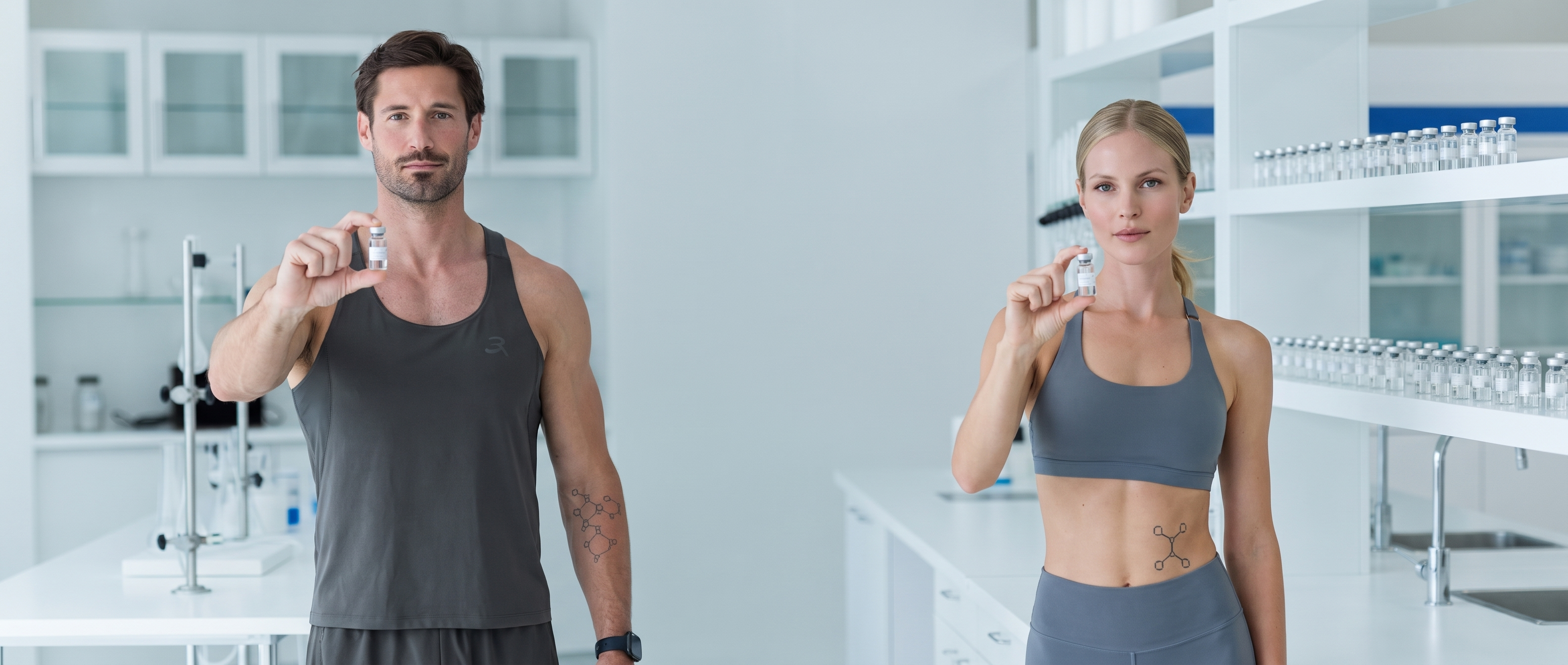
Two researchers in a laboratory each holding a 3 mL peptide vial, shelves of vials behind them
Compounds · Sourced Dosing Ranges

Know exactly what to draw.

Pick your peptide, enter your vial size and how much water you're adding, and we'll tell you exactly what to draw — with a week-by-week plan and the research behind every number.

52Compounds
120+Cited Studies
10Categories
0Sponsored Claims
Mixing Calculator
Concentration
Doses per vial
Suggested barrel
See the full plan & research →

Mixing maths only · for research use · not a dosing recommendation

What this site does differently

Most peptide calculators stop at "mL per dose." Ours keeps going — showing you the doses used in real research, a week-by-week plan, and how many vials you'll get through.

01

Knows your peptide

Select a peptide and the calculator loads its documented research range, typical vial sizes, administration route, and half-life — then renders every tier of that range as a draw volume for your mix.

Try it →
02

Shows the whole range

Published protocols report ranges and titration schedules, not one magic dose. Every compound page shows the low, standard, and upper bounds separately — plus how confident the underlying evidence is.

See the chart →
03

Every number is sourced

An indexed literature table of contents sits behind every number, grouped by compound class, with the study, journal, year, and what that paper actually established.

Open the library →

Browse by compound class

Fifty-two compounds organised into ten research categories.

Methodology

Where the numbers come from

Dose ranges on this site are pulled from three tiers of evidence, and we label which tier a compound sits in rather than flattening them together:

  • Clinical trial data — registered human trials with published dose-escalation arms (the GLP-1 class, tesamorelin, elamipretide, bremelanotide).
  • Preclinical research data — where only weight-based research dosing exists, we say so and give the reported mg/kg rather than implying a human equivalent.
  • Observational and grey literature — commonly reported research-community ranges, flagged explicitly as low-confidence.

See every citation in the Research Library →

Evidence tiers at a glance

TierCompoundsMeaning
ClinicalHuman trial dosing published
PreclinicalPreclinical research only
LimitedSparse or community-reported

New to this? Start here

Three short guides covering the basics, in plain English.

Guide

How to mix a vial

Which water to use, how to add it without wrecking the peptide, and the simple maths for working out your concentration.

Read →
Guide

How to read a syringe

What a "unit" actually means, how the different syringe sizes compare, and the mg / mcg / IU mix-up that catches nearly everyone out.

Read →
Guide

How to store it

How long a vial lasts before and after mixing, what temperature it needs, and the mistakes that ruin a vial.

Read →
Calculator

Peptide Mixing Calculator

Pick your peptide, tell us what's in the vial and how much water you're adding, and we'll show you exactly what to draw — plus a week-by-week plan and the doses used in research.

1Set Up Your Mix

All answers assume a U-100 syringe — the standard kind. On these, 1 unit = 0.01 mL. A bigger syringe holds more, but the numbered lines mean the same thing.

Your Answer

Draw To This Line
That's This Many mL
Doses In The Vial

2Week-By-Week Plan —

WhenDoseHow OftenHow Many mLDraw ToNumber Of DosesPeptide Used

3Common Doses —

worked out for your mix
LevelDoseHow OftenHow Many mLDraw ToDoses In Vial
Please read this. These numbers come from published research. They are here as reference, not as instructions. A lot of them come from lab studies rather than studies in people, and some of these peptides have never been given to a person at all.

About This Peptide

Where These Numbers Come From

Reference

Master Dosage Chart

Every compound in the database with its class, common vial strengths, reported research range, cadence, route, half-life, and evidence tier. Sort or filter, then jump straight into the calculator.

CompoundClassVial SizesReported RangeCadenceRouteHalf-lifeEvidence

Ranges reflect figures reported in the cited literature. They are not recommendations, and the presence of a compound in this table is not an endorsement of its use.

Research Library

Peptide Research Literature — Table of Contents

An indexed bibliography organised by compound class. Each entry names the study, the journal and year, and what that paper actually established — so you can judge the strength of the evidence yourself rather than taking a number on faith.

On citation practice. Entries name the primary study and its venue rather than reproducing abstracts. Search links resolve to PubMed so you can pull the record and full text yourself. Where a compound has no peer-reviewed human literature, the section says so plainly instead of padding the list.
Fundamentals

Handling & Measurement Guides

The mechanical background the calculator assumes you already know.

Reconstitution

Lyophilised peptide arrives as a dry cake or powder under vacuum. Reconstitution is the act of dissolving that cake into a known volume of sterile diluent so that a measurable fraction of it can be withdrawn.

Choosing a diluent

Bacteriostatic water is sterile water containing roughly 0.9% benzyl alcohol, which suppresses microbial growth and makes multi-draw vials viable for a matter of weeks under refrigeration. Sterile water for injection contains no preservative and is generally reserved for single-draw work. A handful of compounds — copper peptides and some acetate salts among them — have documented compatibility quirks with benzyl alcohol, so check the compound profile before defaulting.

The mechanics

  1. Let the vial reach room temperature before opening. Cold glass plus cold powder makes for slow, incomplete dissolution.
  2. Swab both stoppers with isopropyl alcohol and let them dry.
  3. Draw the diluent, then angle the needle so the stream runs down the inner wall of the vial rather than jetting directly onto the cake. Peptide bonds are mechanically fragile.
  4. Let the vacuum pull the diluent in; don't force the plunger.
  5. Swirl gently or let it sit. Never shake. Agitation shears peptide chains and denatures them.
  6. Wait until the solution is completely clear. Persistent cloudiness or visible particulate after several minutes means something is wrong — don't proceed.

The arithmetic

concentration (mg/mL) = vial strength (mg) ÷ diluent volume (mL)
volume per dose (mL) = dose (mg) ÷ concentration (mg/mL)
syringe units (U-100) = volume (mL) × 100

The diluent volume is a free choice, and it is the only lever you have over measurement precision. A 5 mg vial in 1 mL gives 5 mg/mL, which puts a 250 mcg dose at 5 units — legible, but every half-unit of error is a 10% dosing error. The same vial in 2.5 mL gives 2 mg/mL and puts that dose at 12.5 units, where the same absolute error matters far less. Dilute enough that your target lands somewhere in the mid-range of the barrel.

Syringes & Units

An insulin syringe marked U-100 is calibrated for insulin at 100 international units per millilitre. That calibration is what defines the unit: 1 unit = 0.01 mL. This holds regardless of barrel size — a 0.3 mL barrel simply stops at 30 units, a 0.5 mL at 50, a 1 mL at 100.

This is the single most common source of error in peptide work. A "unit" is a volume, not a quantity of peptide. Ten units of a 2 mg/mL solution and ten units of a 10 mg/mL solution are the same volume and five times different in content.

BarrelCapacityTotal unitsSmallest graduationBest suited to
U-300.3 mL301/2 unitMicrogram doses, GH secretagogues
U-500.5 mL501 unitMid-range volumes
U-1001.0 mL1001–2 unitsLarge-volume or dilute solutions

The unit chain

Four units of measure show up constantly and they are not interchangeable:

  • mg — milligram. Mass. What vials are labelled in.
  • mcg (µg) — microgram. 1 mg = 1000 mcg. What most non-GLP-1 research doses are expressed in.
  • IU — international unit. A biological activity measure, not a mass. Conversion to mg is compound-specific: growth hormone is conventionally ~3 IU per mg, hCG is a different scale entirely. Never assume a universal factor.
  • Syringe units — pure volume. 1 unit = 0.01 mL. Meaningless without knowing the concentration.

Storage & Stability

Lyophilised peptide is comparatively robust: kept dry, dark, and at −20 °C, most compounds in this database are stable for a year or more, and many tolerate 2–8 °C for months. The moment water is introduced, that changes.

StateTemperatureTypical windowNotes
Lyophilised, sealed−20 °C12–24 monthsProtect from light and moisture
Lyophilised, sealed2–8 °C1–3 monthsAcceptable short-term
Reconstituted, bacteriostatic2–8 °C2–4 weeksCompound-dependent; some far shorter
Reconstituted, sterile water2–8 °C~24 hoursNo preservative — single session
Any stateRoom tempHoursDegradation accelerates sharply

Practical points

  • Do not freeze a reconstituted vial. Ice crystal formation and repeated freeze–thaw cycles are among the most destructive things you can do to a peptide in solution.
  • Copper peptides (GHK-Cu) and several others are photosensitive. Amber vials or foil, not a clear vial on a shelf.
  • Store vials upright, away from the fridge door where temperature swings are largest.
  • Date the vial at reconstitution. Memory is not a stability record.
  • Cloudiness, colour change, or visible particulate that develops after a clear reconstitution means the solution has failed. Discard it.
Scope note. These guides describe laboratory handling of research chemicals. They are not instructions for preparing anything for administration to a person or animal, and nothing on this site should be read as endorsing that use.